


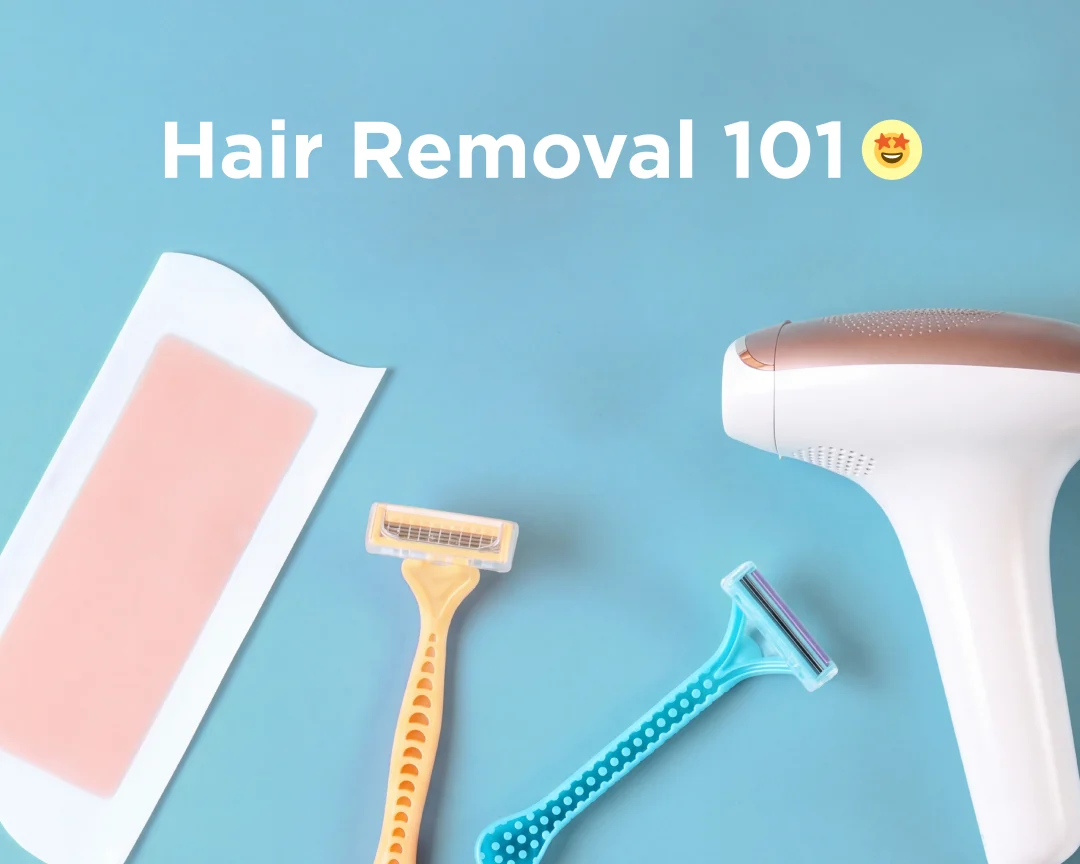
Ever wonder why shaving lasts days, while waxing can last weeks? Or why hair removal with ADLight™ needs more than one session?
The answer starts beneath your skin. Each hair follicle moves through its own growth cycle. Different removal methods affect the hair in different ways and at different stages.
Understanding that cycle can help you set realistic expectations before choosing a method.
Key Takeaways
- Shaving cuts hair at the surface. Waxing pulls it from the follicle. Both are temporary, as the hair grows back over time.
- ADLight™ Hair Removal targets pigment in growing hair, so it takes around 5–8 sessions.
- Hair colour, skin tone, body area, and hormones can affect results.
- Shaving between sessions is fine, but skip waxing and plucking.
How Does the Hair Growth Cycle Affect Hair Removal?
Hair does not grow continuously at the same rate. Each follicle follows a cycle, and nearby hairs may be in different stages.
This matters most for methods that target structures inside the follicle.
Active Growth Stage
First up is the active growth stage. Cells at the base of the follicle divide quickly to build the hair shaft.
This is the key stage for light-based treatment. The StatPearls clinical review says the hair root responds to light treatment only during the active growth phase.
The Transition Stage
Next is a short transition phase. Hair growth stops, and the lower part of the follicle begins to shrink.
The visible hair may still be present, but it is no longer actively growing.
The Resting Stage
During this period, the follicle rests before another growth cycle begins.
Not every follicle reaches this stage together. That is why hair can appear to return unevenly after removal.
The Shedding Stage
This is when the old hair sheds. A new hair forming in the follicle underneath helps push it out.
Once it sheds, the follicle can later produce a new hair as another cycle begins.
How Common Hair Removal Methods Work
Not all techniques reach the same part of the hair.
Shaving Cuts Hair at the Surface
A razor cuts hair at skin level. It does not remove the follicle or stop the growth cycle.
The American Academy of Dermatology says shaving results are short-lived. Some people need to shave every few days.
Shaving also does not make hair grow back thicker. Mayo Clinic notes it does not change hair’s thickness, colour or growth rate. Freshly cut hair simply has a blunt tip, which can feel coarse.
Waxing Pulls Hair From the Follicle
Wax sticks to the hair and pulls it from the follicle.
The American Academy of Dermatology says results can last a few weeks or longer. However, waxing is still a temporary removal method.
Because follicles grow at different times, new hairs may appear before others do.
Depilatory Creams Break Down Hair
Depilatory creams use chemicals to weaken the hair shaft. The softened hair can then be wiped from the skin.
Like shaving, this method does not aim to disable the follicle. The AAD advises a patch test first, since some creams can irritate skin.
Why the Hair Growth Cycle Matters for ADLight™ Hair Removal

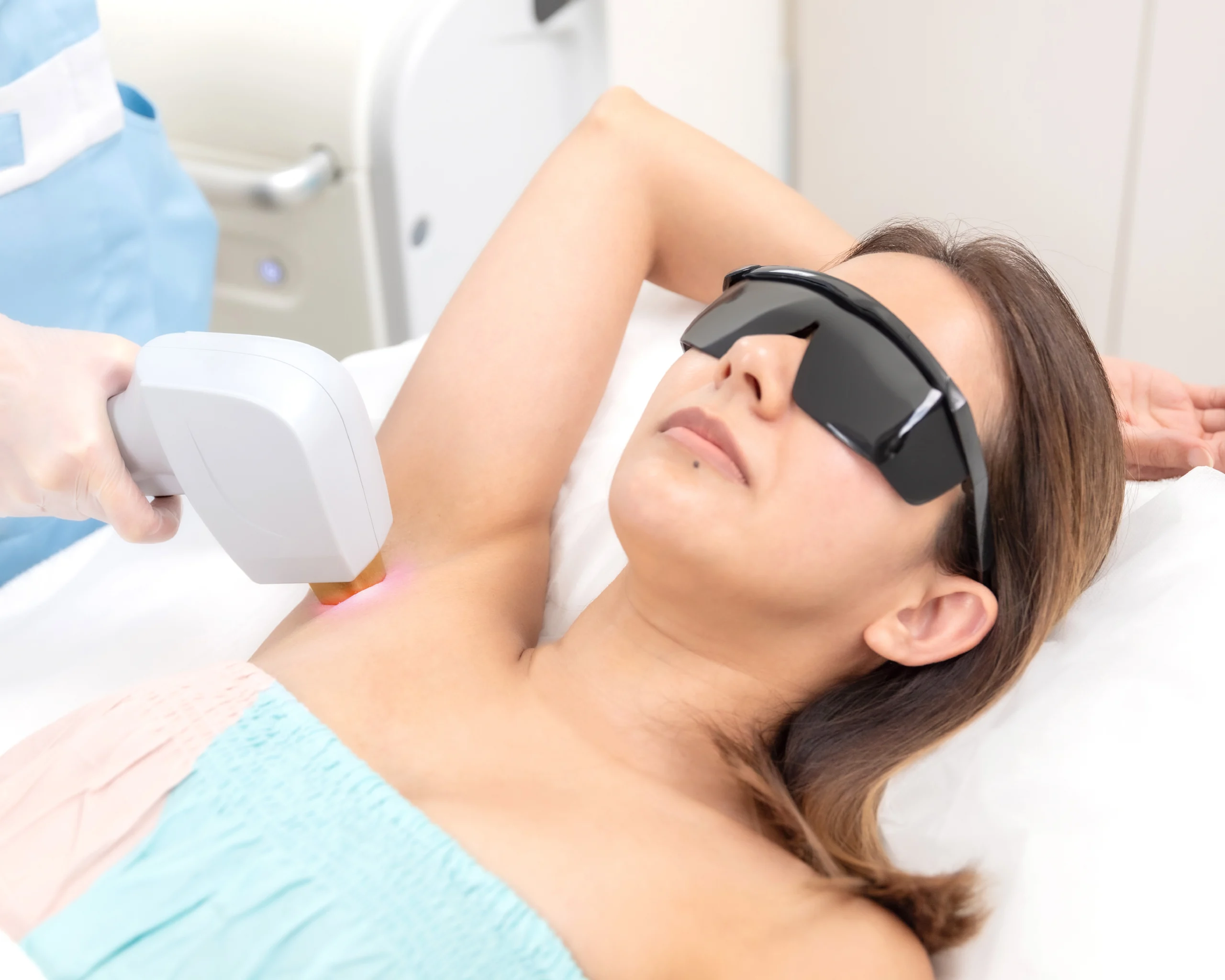
IPL, or intense pulsed light, works differently from shaving or waxing. It acts on the follicle, not just the hair above the skin.
IPL sends broad-spectrum light into the skin. Melanin, the pigment in your hair, absorbs that light. The energy becomes heat, which damages the follicle and stops regrowth over time.
At Japan IPL Express, Singapore’s top unisex hair removal specialist, we use ADLight™ Hair Removal. It is next-generation, Japanese-patented Pulsed Light, built on over 10 years of hair removal expertise.
The light needs hair follicles containing growing hair to target. That is why repeated IPL hair removal sessions are part of the plan.
Why One Session Is Not Enough
Your hairs are not all in the active growth phase at once.
During one session, some follicles may contain actively growing hairs. Others may be resting or changing phases.
Repeat sessions allow treatment to reach more hairs as they enter the active growth stage. ADLight™ Hair Removal usually takes around 5–8 sessions, every 3 weeks. Men’s facial hair is more stubborn, so it is treated every 2 weeks.
Consistency counts. Spacing sessions months apart is not recommended, as hairs may miss the ideal treatment window and results can slow. Many customers notice a difference from the first session.
A systematic review published in the Journal of Cosmetic and Laser Therapy also found that long-term outcomes differed by body area. Hair growth cycles vary between areas such as the face, legs, and underarms.
What to Do Before and Between Sessions
- Skip waxing, plucking and epilating about 3 weeks before your first session. They pull out the root the light needs to target.
- Shaving is fine. It cuts the hair but leaves the root in place.
Is ADLight™ the Same as Laser Hair Removal?
No. Both use light, but the technology is different.
StatPearls describes IPL as polychromatic, non-coherent light from a flash lamp. In plain words, it sends out a range of wavelengths at once. A laser uses one set wavelength.
ADLight™ is pulsed light, not a laser. It works across a broad 730–860nm range to reach stubborn, deep-rooted hair and fine hair. Thanks to a built-in cooling tip, most customers find it painless.
Results from one device or body area should not be taken as a guarantee for everyone.
Why Hair and Skin Colour Matter
Light-based treatment relies partly on pigment.
Dark, coarse hair generally gives light more pigment to target. The StatPearls review notes the best results come with dark hair. White, grey, and very light hair contain less melanin and can be harder to treat.
Skin pigment matters too. With ADLight™, settings are adjusted to your skin tone, so both lighter and darker skin tones can try it.
Results can also differ because of:
- Body area
- Hair thickness
- Hair growth stage
- Hormones
- Number and timing of sessions
Our professionally trained therapists check your skin before every session and will not proceed on irritated skin. Have a medical condition or take medication? Check with us on WhatsApp at +65 9005 0550 first.
Is Hair Removal Permanent?
It depends on the method.
DermNet lists shaving, waxing, threading, and depilatory creams as temporary methods. They remove all or part of the visible hair without reliably stopping future follicle growth.
ADLight™ is designed for permanent hair removal with progressive results. Over consistent sessions, hair grows back slower, lesser and finer, then stops. Results vary with hair growth, hormones and skin.
In a blinded in-house study, ADLight™ showed at least 99.63% hair reduction at the 7th* session. It also showed up to 87.4% permanent hair reduction after 5 sessions* on common areas like the underarms, legs and arms.
*Based on a blinded in-house study of 24 participants (38 pairs of treatment areas), IPL vs ADLight™, sessions 3 weeks apart over 5 months. Results vary.
Once you reach your goal, touch-ups move to every 5 weeks, then 6, and gradually less often. You can also just pop in for stray hairs.
Hair Removal Methods at a Glance
| Method | How it works | How long results last |
| Shaving | Cuts hair at the skin’s surface | A day to a few days |
| Waxing | Pulls hair from the follicle | A few weeks or longer |
| Depilatory cream | Weakens the hair shaft with chemicals | Longer than shaving |
| ADLight™ Hair Removal | Light turns to heat and damages the follicle | Progressive results over around 5–8 sessions |
If you want to spend less time shaving or waxing, learn more about hair removal options and how ADLight™ may fit your routine.
Frequently Asked Questions
Does shaving make hair grow faster or thicker?
No. Shaving cuts the hair above the skin. It does not change the follicle’s growth rate or make new hair grow back thicker.
What hair growth stage is best for ADLight™?
The active growth phase is the key stage for ADLight™. This is when the growing hair is closely linked with structures inside the follicle.
Why are several sessions needed?
Hair follicles do not enter the active growth phase at the same time. Consistent sessions help catch more hair follicles at the right stage and time. Most people see results in around 5–8 ADLight™ sessions, spaced 3 weeks apart.
Does waxing stop hair from growing?
No. Waxing removes hair from the root, but the hair can grow back. DermNet classifies waxing as temporary hair removal.
Do I need to shave before ADLight™ Hair Removal?
Not at Japan IPL Express. Our therapists shave the area for you at no extra cost. Just avoid waxing, plucking or epilating for about 3 weeks before your first session.
How do I choose a hair removal method?
Think about how long you want results to last, your skin and hair type, comfort, and upkeep. For permanent hair removal, you can learn more about ADLight™ at Japan IPL Express.
Understanding Your Hair Can Help You Choose
There is no single method that works the same way for every person. Shaving cuts hair, waxing pulls it out, while IPL works with pigment and the growth cycle. If you want a longer-term approach, ADLight™ Hair Removal works with your hair cycle, not against it.
Try it before you buy anything. Every first-time customer gets Free 20 Shots™, with no purchase needed. With No Packages, No Appointments, you just walk in to any of our 17 outlets and pay only for the Shots™ you use. Claim your Free 20 Shots™ today.
References
- American Academy of Dermatology Association. (2023). 6 ways to remove unwanted hair.
https://www.aad.org/public/everyday-care/skin-care-basics/hair/remove-unwanted-hair - Krasniqi, A., McClurg, D. P., Gillespie, K. J., & Rajpara, S. (2022). Efficacy of lasers and light sources in long-term hair reduction: A systematic review. Journal of Cosmetic and Laser Therapy, 24(1–5), 1–8.
https://doi.org/10.1080/14764172.2022.2075899 - Mayo Clinic Staff. (2024). Shaving hair: Does shaved hair grow back thicker? Mayo Clinic.
https://www.mayoclinic.org/healthy-lifestyle/adult-health/expert-answers/hair-removal/faq-20058427 - Natarelli, N., Gahoonia, N., & Sivamani, R. K. (2023). Integrative and mechanistic approach to the hair growth cycle and hair loss. Journal of Clinical Medicine, 12(3), 893.
https://doi.org/10.3390/jcm12030893 - Ngan, V. (2023). Hair removal techniques. DermNet.
https://dermnetnz.org/topics/hair-removal-techniques - Vaidya, T., Hohman, M. H., & Kumar, D. D. (2023). Laser hair removal. In StatPearls. StatPearls Publishing.
https://www.ncbi.nlm.nih.gov/books/NBK507861/
