


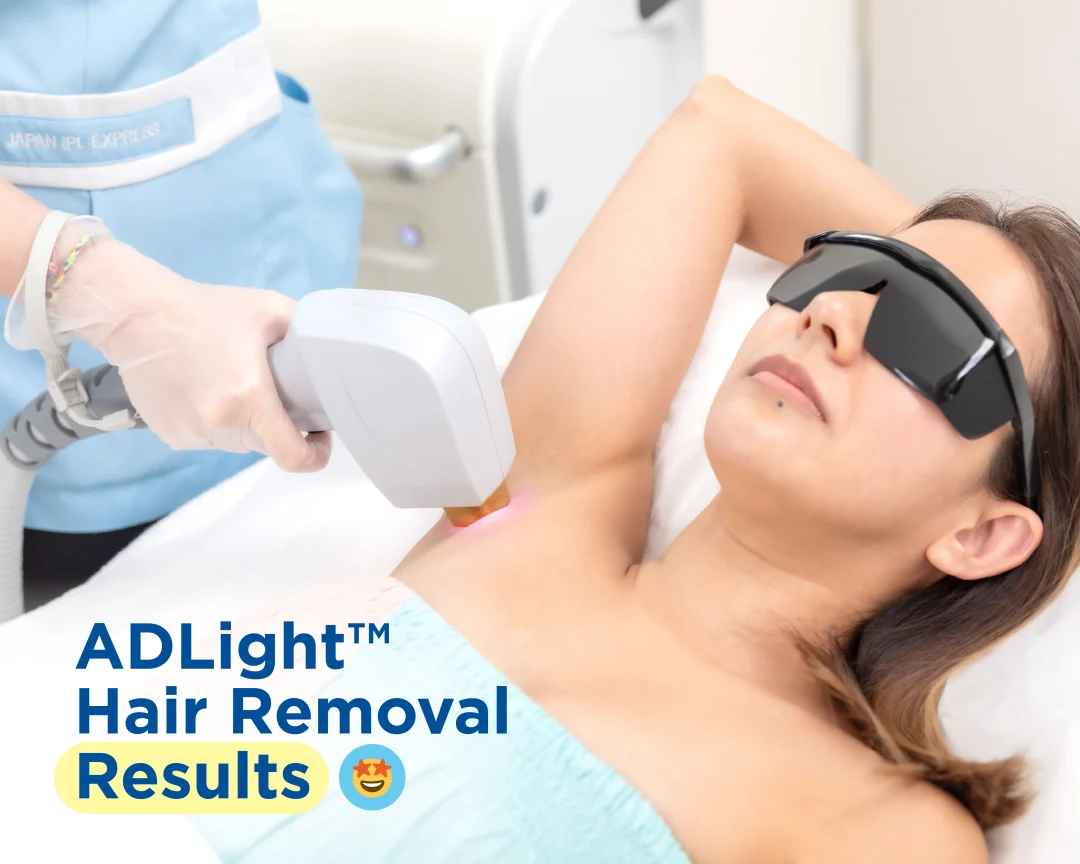
A few sessions in, you shave and notice something new. The stubble feels softer, and it takes longer to come back. That change is common with light-based hair removal, and there is real science behind it.
At Japan IPL Express, we have offered walk-in permanent hair removal services in Singapore since 2013. This guide explains what ADLight™ does to your follicles over time, and why results differ from person to person.
Key Takeaways
- Light turns into heat: ADLight™ targets the pigment in hair, and the heat damages the follicle over time.
- Two changes can happen: Studies show fewer hairs and thinner hair shafts after repeated sessions.
- Timing matters: Hair grows in cycles, so regular and consistent sessions catch more hairs in the right phase.
- Results vary: Hair colour, thickness, skin tone, body area and hormones all affect your progress.
- Finer is a good sign, not a finish line: Some hair can return, and touch-ups may be needed.
How Does ADLight™ Hair Removal Work?
 How Light Energy Targets Hair Follicles
Light-based hair removal relies on selective photothermolysis. In plain words, the light only heats one target while sparing the skin around it.
- Melanin absorbs the light. This is the pigment that gives hair its colour.
- The light turns into heat. The heat builds up inside the hair.
- The heat damages the follicle.
- Regrowth slows. With consistent sessions, damaged follicles result in slower, thinner and lesser hair regrowth.
Understanding ADLight™ Technology
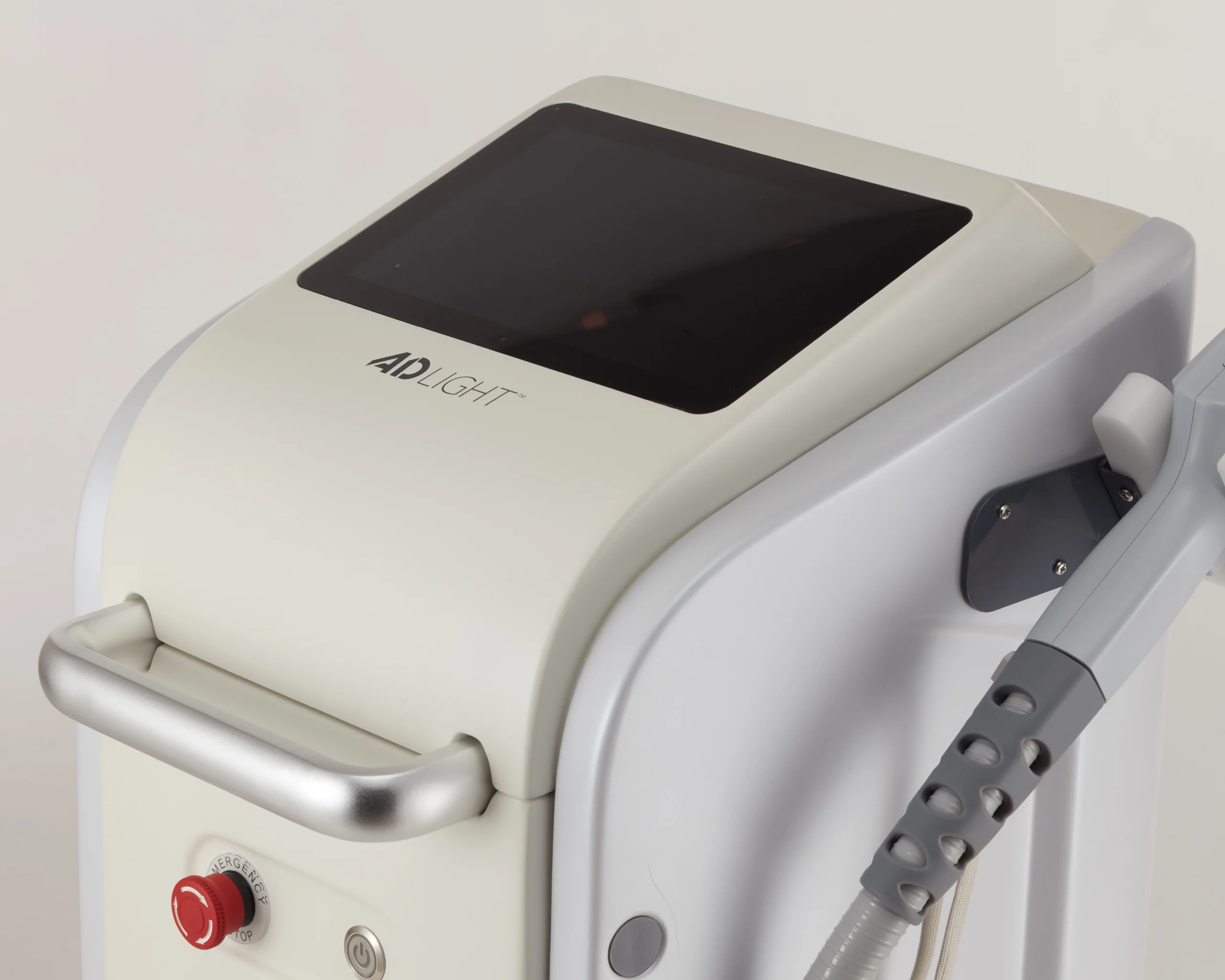
ADLight™ stands for Advanced Diode Light, but it is not a laser. It is next-generation Pulsed Light technology.
It works across a broad 730 to 860nm range to reach stubborn, deep-rooted hair. A built-in cooling tip helps keep each session comfortable.
Why Does Hair Become Finer After Repeated Treatments?
How Treatment Can Affect Hair Shaft Thickness
A 2017 study in the Archives of Dermatological Research tested this. Twenty-one people had six IPL sessions on one underarm, with the other left untreated.
The treated side showed a clear drop in hair count and hair shaft width.
Some follicles had also shrunk, and the hair regrew softer and finer. Scientists call this follicle miniaturisation.
The Difference Between Finer Hair and Less Hair
Hair reduction can involve two separate changes:
- Less hair (lower density): Fewer hairs grow back in the treated area.
- Finer hair (lower thickness): Some hairs that do grow back are thinner.
When both happen together, regrowth looks and feels much lighter.
Why Are Multiple Hair Removal Sessions Necessary?
Understanding the Hair Growth Cycle
Every hair moves through three main phases:
- The active growth phase.
- The transition phase when growth stops.
- The resting phase before the hair sheds.
Your follicles are never all in the same phase at once. Light works best on hair follicles in the active growth stage, when there is plenty of pigment to absorb it. Each session catches a different group of hairs.
What to Expect From Repeated ADLight™ Sessions
We recommend around 5–8 sessions, every 3 weeks. Men’s facial hair is more stubborn, so we suggest every 2 weeks.
This is our guide, not a fixed timeline. Your number of sessions depends on the area, your hair, skin and hormones. Spacing sessions months apart is not recommended, as it can miss the ideal treatment timing and reduce effectiveness.
In our own testing, ADLight™ showed up to 87.4% permanent hair reduction after 5 sessions* on common areas like the underarms, legs and arms.
*Based on a blinded in-house study of 24 participants (38 pairs of treatment areas), IPL vs ADLight™, sessions 3 weeks apart over 5 months. Results vary.
What Affects How Hair Responds to ADLight™?
These factors all play a part:
- Hair colour: Darker hair holds more pigment, so it absorbs more light. DermNet notes IPL tends to work less effectively on light-coloured hair.
- Hair thickness: Coarse, dark hair often responds better than very fine, pale hair.
- Skin tone: Our therapists adjust settings to your skin tone and check your skin before every session. Darker skin tones are welcome to try too!
- Body area: Hair on the face, underarms, legs and intimate areas all grow differently.
- Hormones: Hormone changes can affect how hair grows and regrows.
- Consistent visits: Sticking to your schedule supports progressive results.
A 2022 systematic review in the Journal of Cosmetic and Laser Therapy found that the underarms showed the greatest long-term reduction.
Men considering intimate grooming can read more about Boyzilian ADLight™ hair removal and what a session involves.
Does Finer Hair Mean the Treatment Is Working?
Slower, finer regrowth paired with fewer hairs is a good sign your follicles are responding well to the treatments. Look out for:
- Fewer hairs in the treated area
- Thinner, softer strands
- Slower regrowth between sessions
- Shaving less often
These signs show progress, not proof that every follicle has stopped for good.
Can Fine Hair Still Grow Back?
Yes, some can. A 2014 study in the Journal of the European Academy of Dermatology and Venereology tracked underarm hair for six months after IPL. Hair counts dropped by 87%, and follicles shifted into rest and shrank.
Still, the authors said longer studies are needed to confirm whether these changes last. That is why touch-ups help. Once you reach your goal, sessions can move to every 5 weeks, then 6, then less often.
How to Care for Your Skin Between ADLight™ Sessions
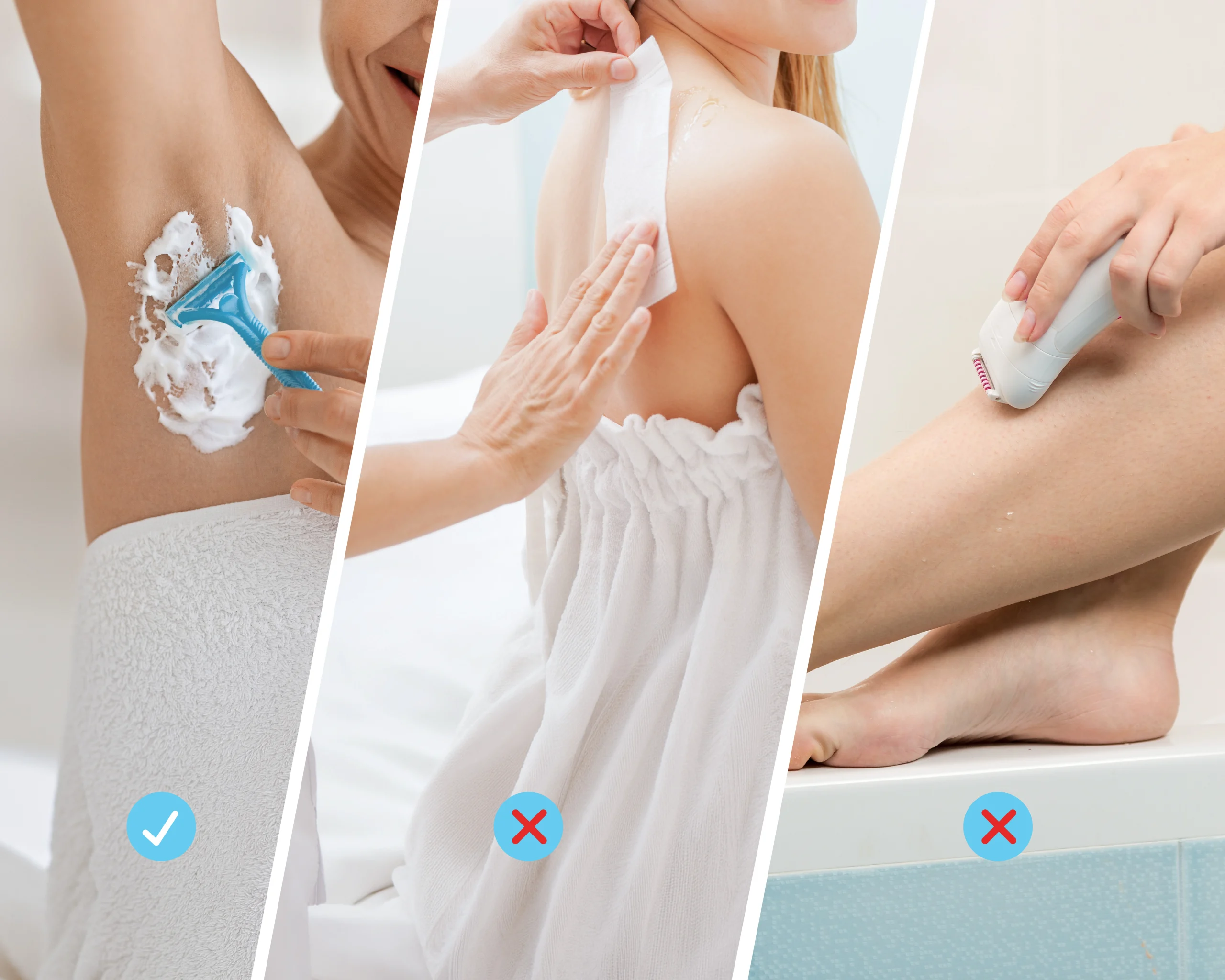 Aftercare supports your skin’s recovery. It cannot promise faster results, but it keeps your skin calm for the next session.
For 1–3 days after each session:
- Skip heat and heavy sweating, like hot showers, saunas, tanning and hard workouts.
- Don’t scratch the treated area.
- Moisturise daily, especially if your skin is dry.
- Skip perfume or deodorant on the area if your skin is sensitive.
- Use sunscreen after facial sessions. Singapore General Hospital also advises limiting sun exposure after a hair removal session.
Between sessions: You may shave in between sessions, but avoid plucking, waxing or epilating. These pull out the root the light needs to target.
If redness or itch lingers, or you have a medical condition, message us on WhatsApp at +65 9005 0550.
Frequently Asked Questions
Why is my hair growing back thinner after ADLight™?
Consistent sessions can affect the follicles, so hair may grow back thinner and less densely. Research links this to follicles shrinking and shifting into a resting phase. It is a common sign of progressive results.
How many ADLight™ sessions will I need?
We recommend around 5–8 sessions, every 3 weeks, or every 2 weeks for men’s facial hair. Results vary with your hair growth, hormones and skin.
Is ADLight™ a laser?
No. ADLight™ is next-generation Pulsed Light. The name stands for Advanced Diode Light, and it is not a laser.
Do I need to shave before my session?
No need. Our therapists shave the area for you for free. Just avoid waxing, plucking or epilating for about 3 weeks before your first session.
Does ADLight™ hair removal hurt?
Most customers find it painless thanks to the built-in cooling tip. You may feel a mild warm or tingling sensation, especially on more sensitive areas of the skin, like the intimate areas.
Can I try ADLight™ before paying?
Yes. Every first-time customer gets Free 20 Shots™ with no purchase needed, usable on any area. Just walk in to any Japan IPL Express outlet islandwide!
Ready to See Your Own Results?
Slower, thinner and lesser regrowth is a good sign your hair is responding. Hair density and thickness drop gradually. Results differ from person to person, and some hair may return. With regular sessions and simple aftercare, you can watch your progress build.
As Singapore’s top unisex permanent hair removal specialist, we keep it simple: No Packages, No Appointments. Still weighing your options? Compare methods in our guide to pain-free hair removal in Singapore.
Claim your Free 20 Shots™ and walk in to any of our 17 outlets whenever you’re free. You Call The Shots™.
References
- Barros, R. T. de B., Stella, O. H. A. S., Galache, T. R., Khachikian, L. C., Liebano, R. E., . . . Pavani, C. (2026). Efficacy and safety of intense pulsed light compared to diode laser for hair removal: A randomized controlled trial. Lasers in Medical Science, 41(1), Article 108. https://doi.org/10.1007/s10103-026-04904-6
- El-Domyati, M., Hosam, W., Moftah, N. H., Abdel Raouf, H., & Saad, S. M. (2017). Hair follicle changes following intense pulsed light axillary hair reduction: Histometrical, histological and immunohistochemical evaluation. Archives of Dermatological Research, 309(3), 191–202. https://doi.org/10.1007/s00403-017-1714-7
- Krasniqi, A., McClurg, D. P., Gillespie, K. J., & Rajpara, S. (2022). Efficacy of lasers and light sources in long-term hair reduction: A systematic review. Journal of Cosmetic and Laser Therapy, 24(1–5), 1–8. https://doi.org/10.1080/14764172.2022.2075899
- Ngan, V. (2005). Intense pulsed light therapy (IPL, flashlamp). DermNet. https://dermnetnz.org/topics/intense-pulsed-light-therapy
- Singapore General Hospital. (n.d.). Intense pulsed light (IPL). https://www.sgh.com.sg/tests-procedures/ipl
- Trelles, M. A., Ash, C., & Town, G. (2014). Clinical and microscopic evaluation of long-term (6 months) epilation effects of the ipulse personal home-use intense pulsed light (IPL) device. Journal of the European Academy of Dermatology and Venereology, 28(2), 160–168. https://doi.org/10.1111/jdv.12069
